
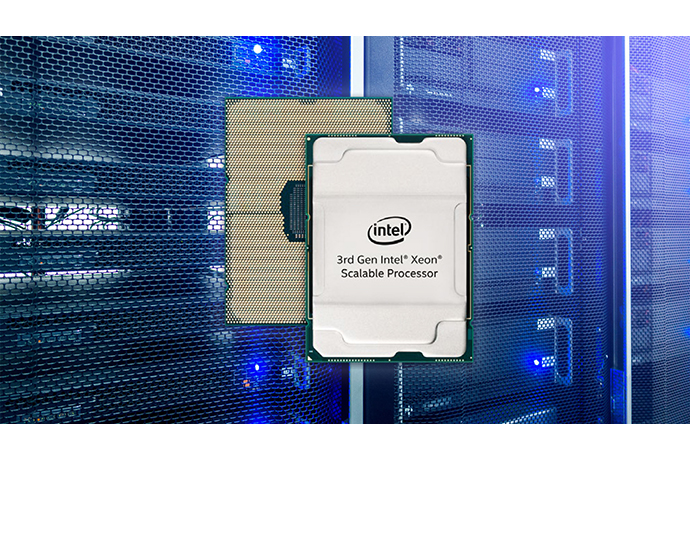
Intel launched a new batch of third-generation Xeon server processors today. Significantly, these are Ice Lake processors—meaning Intel’s 10 nm process, not the increasingly outdated 14 nm process that the majority of Intel’s lineup has been stuck on for many years now.
Today’s selection includes a staggering 36 separate SKUs, ranging from 8-core Xeon Silver 4309Y all the way up to 40-core Xeon Platinum 8380.
Gen-on-gen performance improvement
There’s no question that today’s Ice Lake Xeons are a significant, badly needed improvement to Intel’s server lineup. Similarly to Intel’s Ice Lake notebook parts, clock speeds are down from the older 14 nm parts—but IPC is up more than enough to compensate, and unlike the Ice Lake notebook parts, these Xeons generally boast more cores than the last generations do, rather than fewer.
We haven’t had the chance to go hands-on with today’s Ice Lake Xeons ourselves, but Anandtech did. Comparing today’s 40-core Xeon 8380 to 2019’s 28-core Xeon 8280, single-threaded tests generally come out 3 to 15 percent in favor of the newer generation—and multi-threaded tests favor the newer part by a whopping 54 to 65 percent.
This, of course, ignores the elephant in the room—Intel’s actual competition, which comes in the form of AMD Epyc processors. As big an improvement as Xeon 8380 is, it’s still not enough to catch up to Epyc Milan, or even the older Epyc Rome.
Comments