
Today, AMD launched Epyc Milan, the server/data center implementation of its Zen 3 architecture. The story for Epyc Milan is largely the same one told by Ryzen 5000—lots of cores, high boost clock rates, 19 percent gen-on-gen uplift, and an awful lot of polite Schadenfreude at rival Intel’s expense.
The comparison between AMD and Intel is even more stark in the server room than it was in consumer PCs and workstations, because there’s no “but single thread” to fall back on here. Intel clung to a single-threaded performance lead over AMD for some time even after AMD began dominating in multithreaded performance. Although that lead disappeared in 2020, Intel could at least still point to near-equivalent single-threaded performance and pooh-pooh the relevance of the all-threaded performance it was getting crushed on.
This isn’t an excuse you can make in the data center—Epyc and Xeon Scalable are both aimed squarely at massively multitenanted, all-threads workloads, and Xeon Scalable just can’t keep up.
Head to head with Xeon Scalable
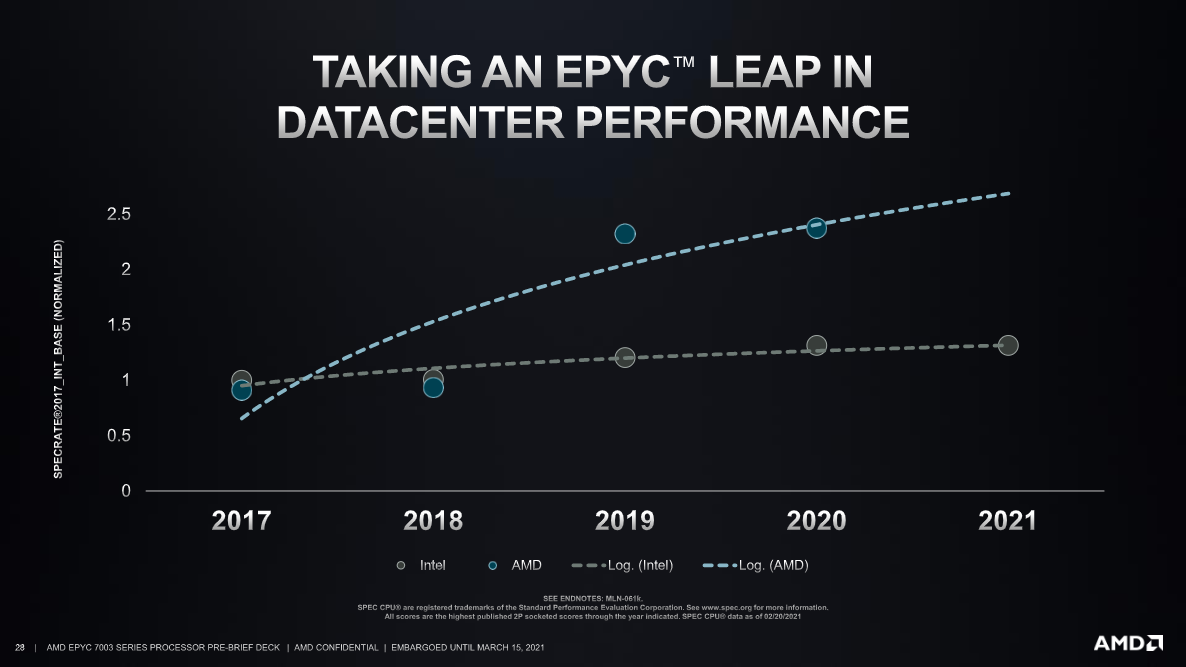
AMD took a giant leap forward in 2019 that Intel has so far been unable to replicate.AMD
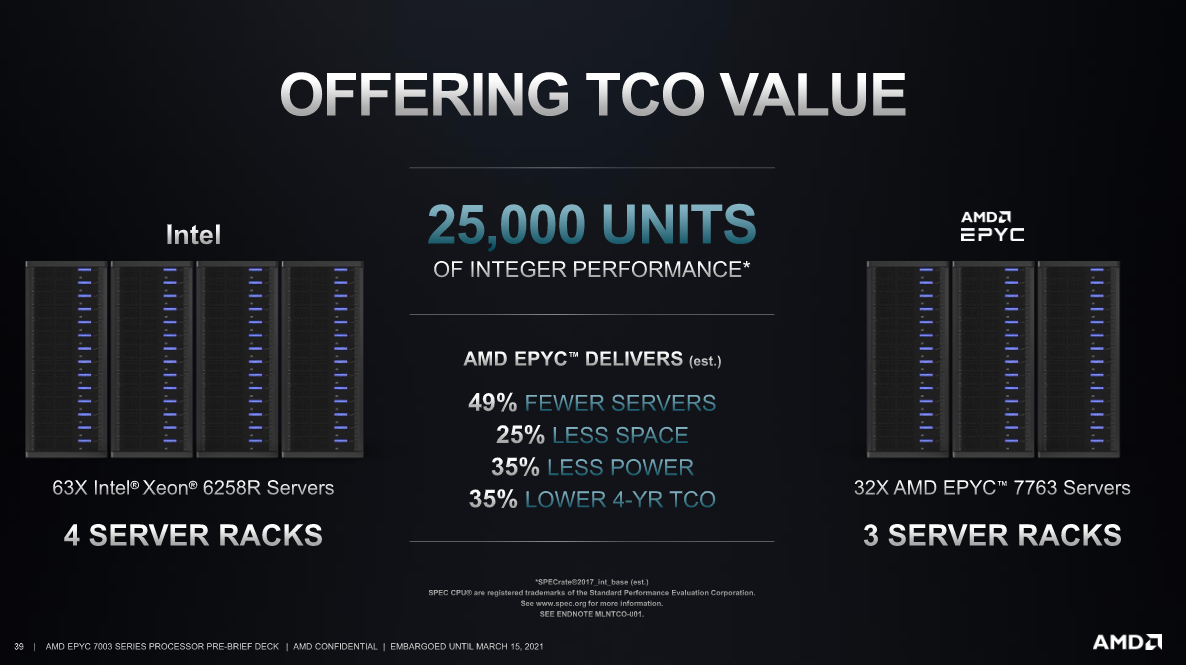
You can handle more massively multithreaded concurrent workload with fewer systems by going Epyc instead of Xeon.AMD
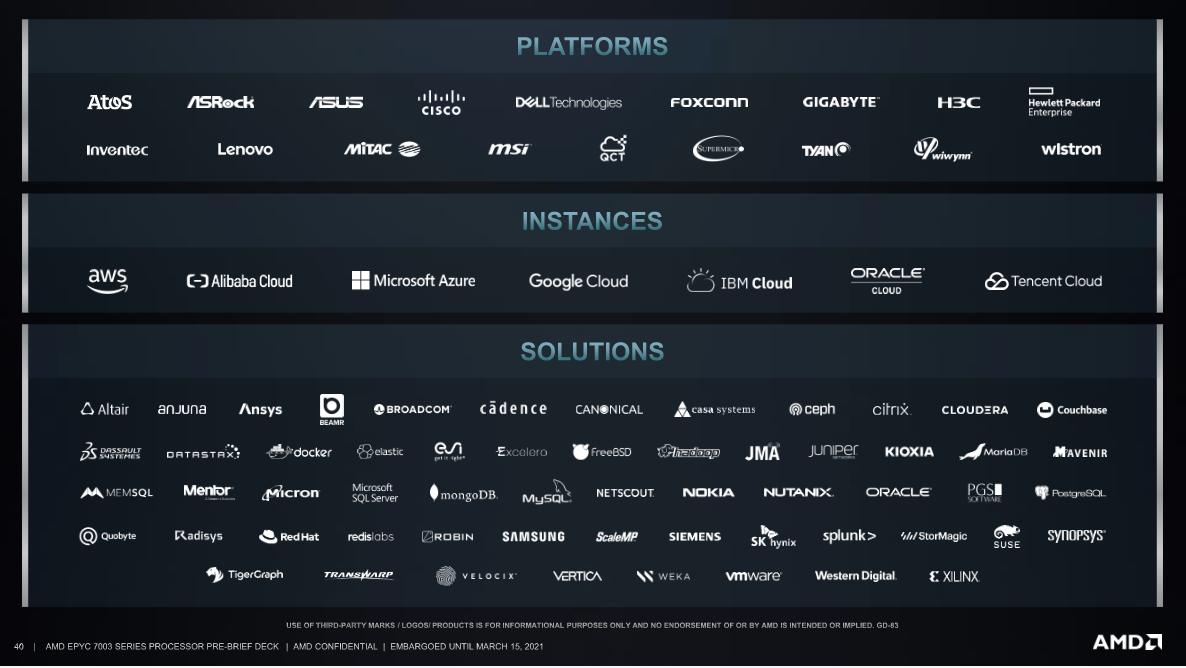
It shouldn’t be difficult to find an Epyc-powered server to handle your workload, at any level of the stack.AMD
We’ll get into some of the architectural changes in Epyc Milan later, but they’re probably not much surprise to readers who are really into CPU architecture in the first place—the transition from Rome to Milan is a shift from Zen 2 to Zen 3 architecture, not much different in the rack with Epyc Milan than it was on the desktop with Ryzen 5000.
We prefer the simple, boots-on-the-ground perspective here: these are faster processors than their Xeon competitors, and you can get more done with less physical space and electrical power with them. AMD presented a slide with a smoothed progress curve that shows Epyc lurching into high gear in 2017, bypassing Xeon and continuing to leave its rival in the dust.
Comments