
The Supermicro AS-5014A-TT is a gargantuan AMD Ryzen Threadripper Pro workstation. Not only does the system support a liquid-cooled Threadripper Pro CPU, but also has expansion options that will simply outclass mainstream workstations. This is a system you have seen a few times on STH, but it is now time for its formal review. Let us get to it.
Supermicro AS-5014A-TT AMD Ryzen Threadripper Pro Workstation Hardware Overview Supermicro AS-5014A-TT External Hardware Overview
The tower system is certainly a design step up from Supermicro beige or black boxes of the past. There is now some neat branding. Normally we do not discuss aesthetics with Supermicro servers, but this is a workstation likely destined to sit deskside.
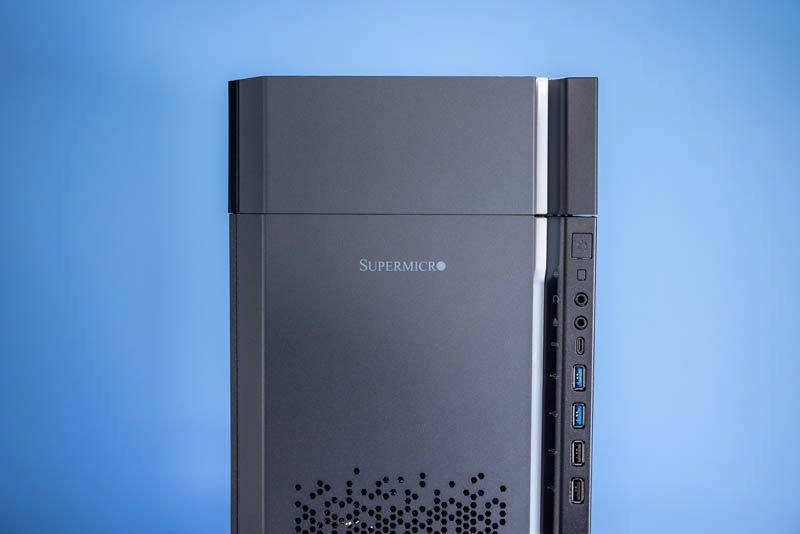
On the side, we get a headphone and a microphone jack. There are then five USB ports. Two Type-A USB 2.0 for a mouse and keyboard. There are then three USB 3 ports, two Type-A, and one Type-C.
The top section of the chassis in the photo above looks like a flat panel. Behind it is not some amazing piece of technology. Instead, it is a handle to help move the large system.
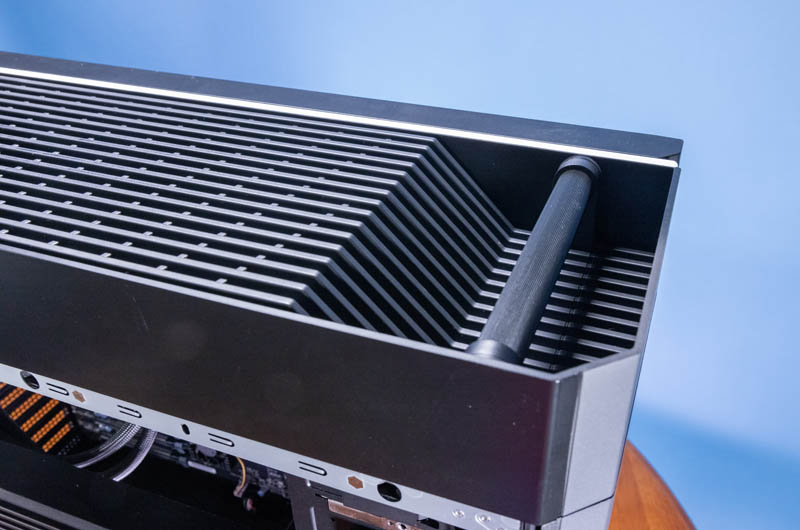
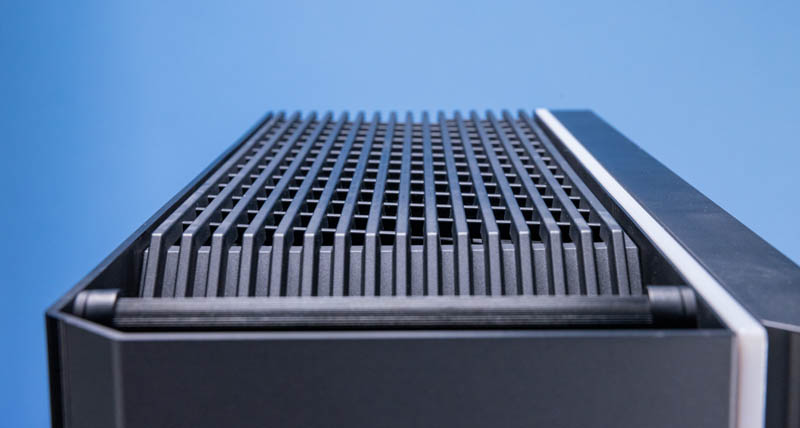
The rest of the top of the chassis is the radiator grill for the CPU’s liquid cooler.
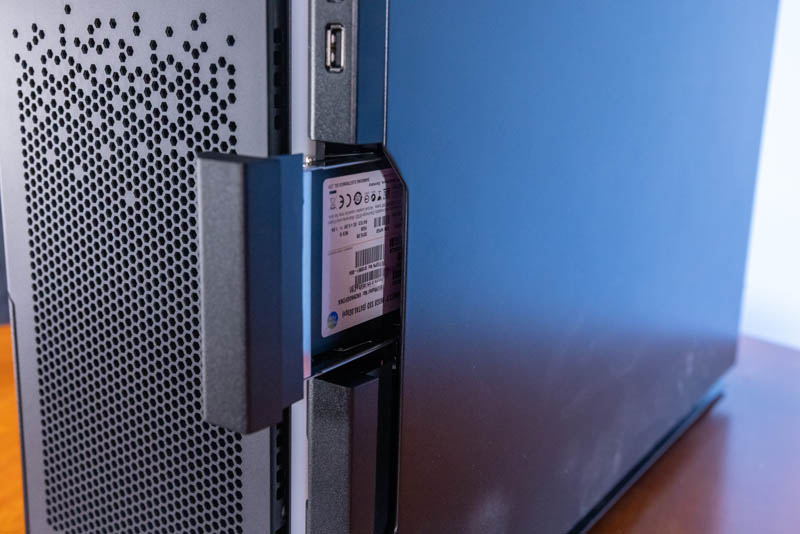
Below the ports are two drive bays. These are SATA bays meant for OS drives, SneakerNet transfers, or to use to load footage from video recorders like the Atomos line that record RAW footage to SATA SSDs.
Behind that front panel, we get the 5.25″ expansion bays that are unoccupied in our system.
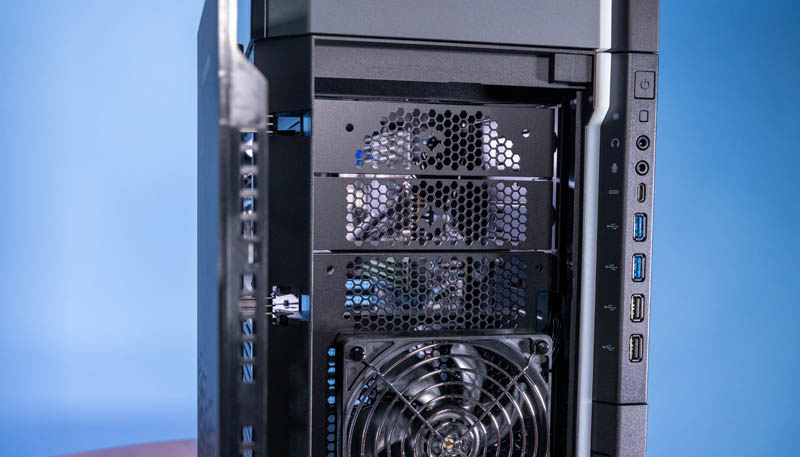
Below that, we get two chassis fans to help with expansion card airflow. One will also see a filter on the door of the chassis.
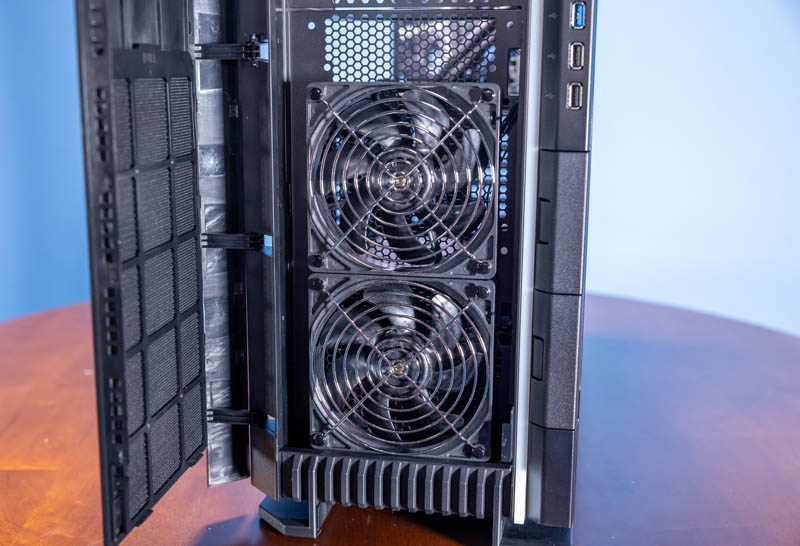
On the rear of the unit, we get the top area for the radiator, then the main components on the rear of the system. That includes a large San Ace fan.
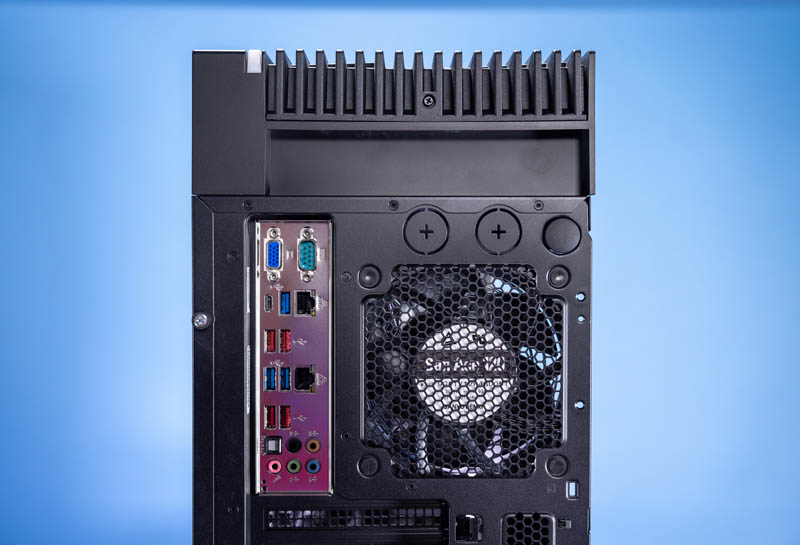
On the rear, we get serial and VGA ports. There is then a 1GbE management port for IPMI/ Redfish. Then we get a USB 3.2 Gen2x2 Type-C port for high speed duties. The other seven USB 3 ports are 2x 3.2 Gen1 and 4x Gen2.
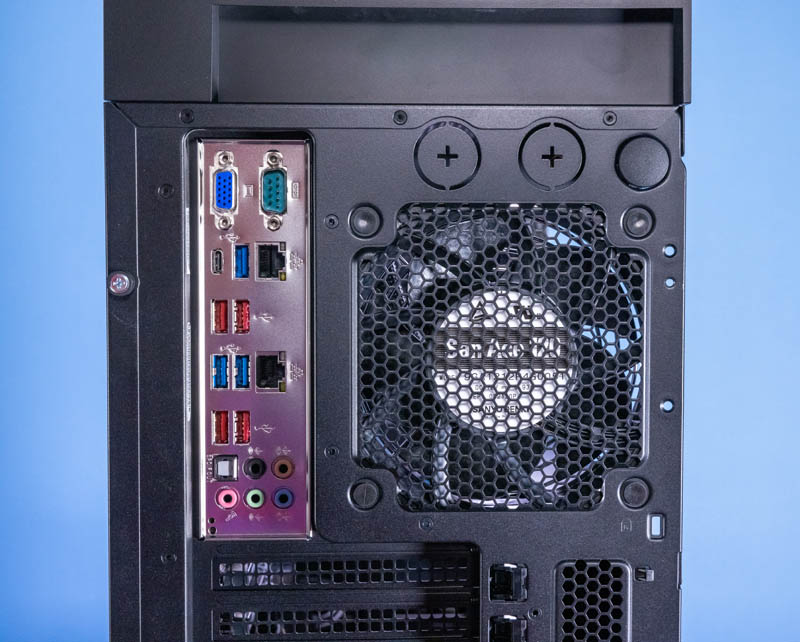
LAN is provided by a Marvell-Aquantia AQC113C so we get 10Gbase-T capabilities. Audio is a 7.1 solution and has S/PDIF optical output as well.
On the rear expansion slot situation, we have a chassis with eight I/O slots on the rear of the system. We will show how these are wired internally in our internal overview.
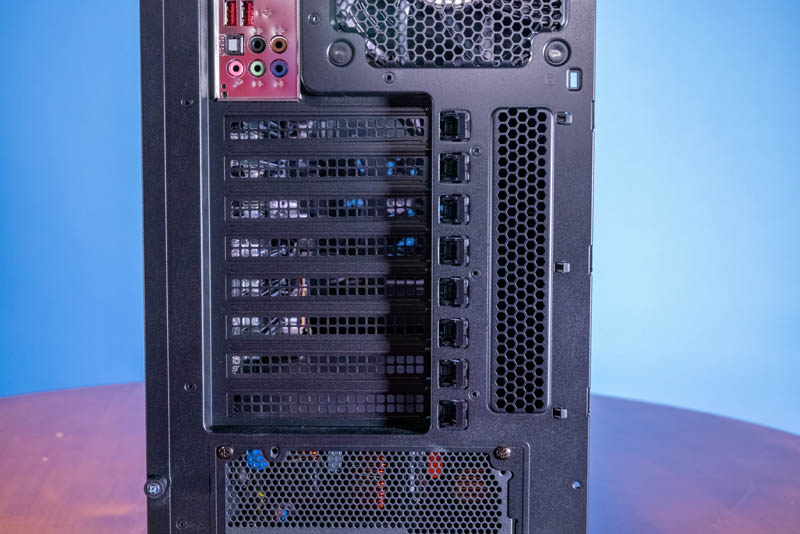
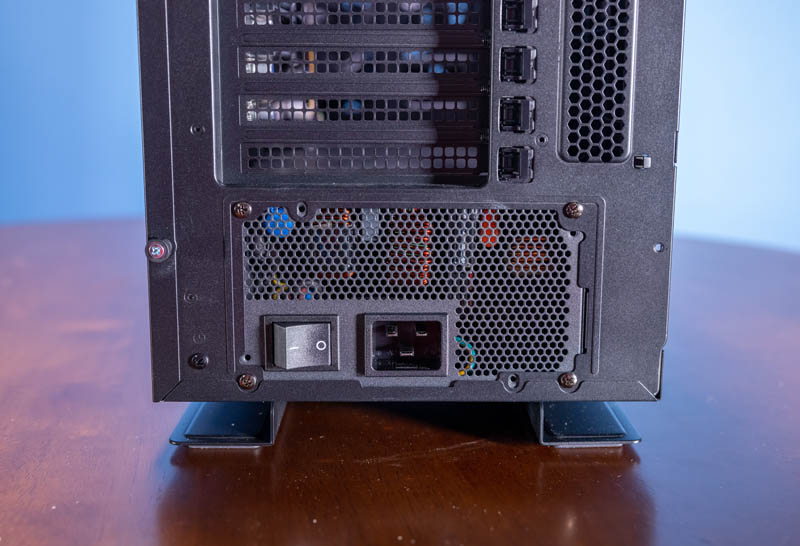
At the bottom, we get up to a 2kW power supply. From 115-200V it is a 1.5kW unit and below 115V it is 1.2kW.
Comments