
The Supermicro SYS-221H-TNRR is the company’s 2U dual-socket server that is an updated design for a new and very different generation of server processors. With features such as DDR5 and PCIe Gen5 support, the platform is a major generational update. That is why we are going to review the platform today. Supermicro SYS-221H-TNR External Hardware Overview
The Supermicro SYS-221H-TNRR is a 2U server that is part of Supermicro’s new “Hyper” line. This is one of Supermicro’s higher-end servers where we expect the greatest number of options.
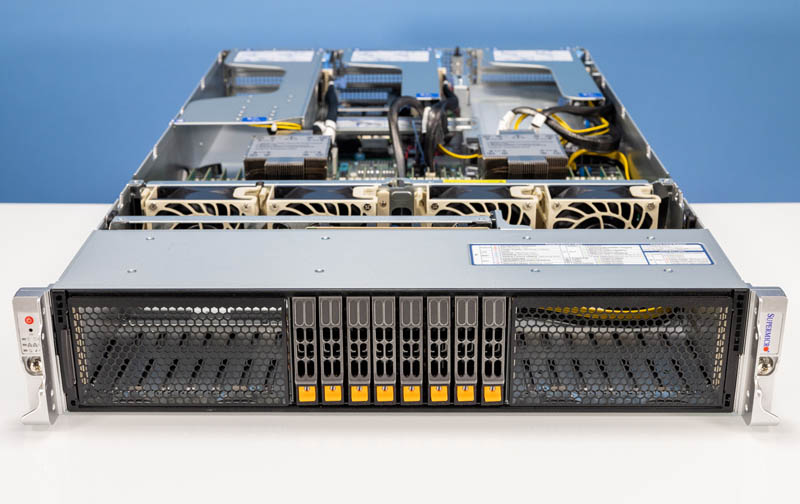
The front drive bays in this system only have the center eight populated. There are room for 24.
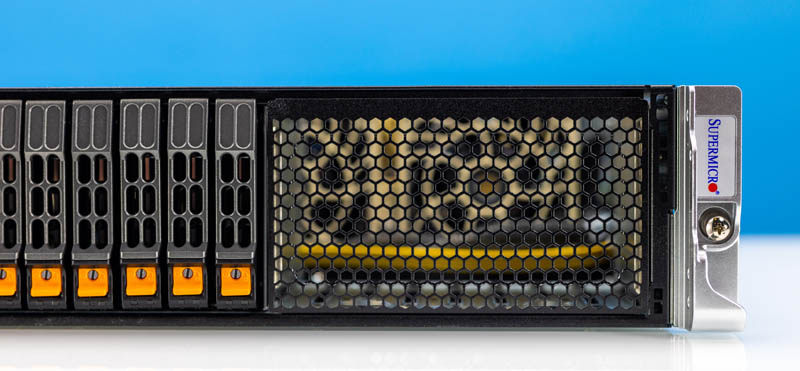
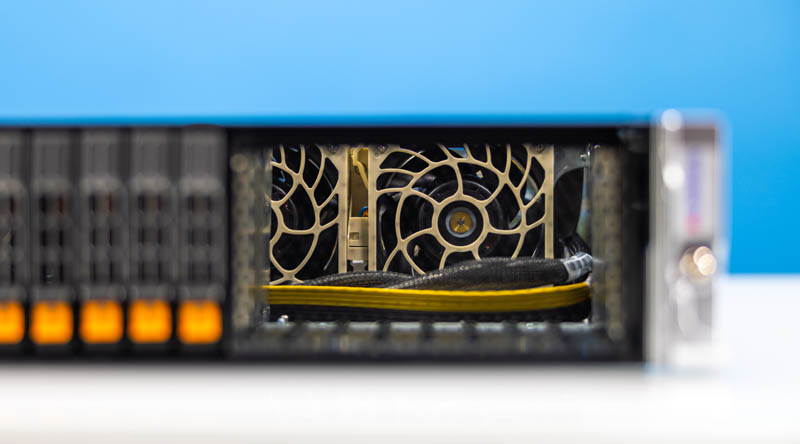
Not having the extra drive bays populated is different for Supermicro as it has traditionally populated the entire backplane, even if they are unused. Still, the open mesh allows for more airflow to the CPUs and the rest of the chassis and one can see a relatively clear airflow path.
This system uses Supermicro’s toolless 2.5″ drive trays. These are much easier to install than the older screw models and save time servicing the system.
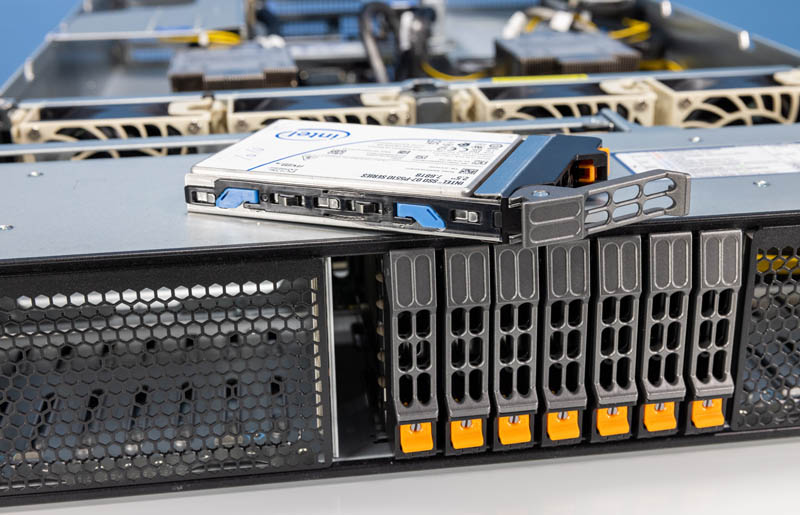
These use Supermicro’s toolless 2.5″ bays.
Moving to the rear of the system, we have a fairly standard layout for Supermicro that is similar to what we have seen for a few generations.
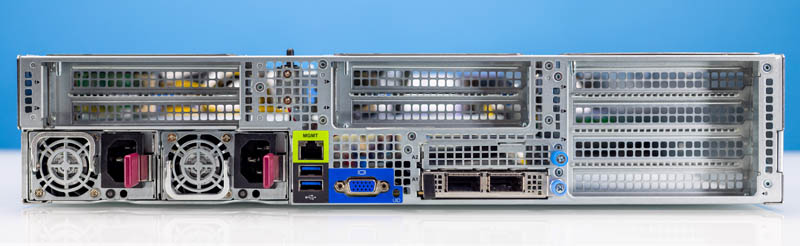
The left side has two power supplies. These are 80Plus Titanium units and our system has 1.2kW models installed. Above the power supplies is a riser.
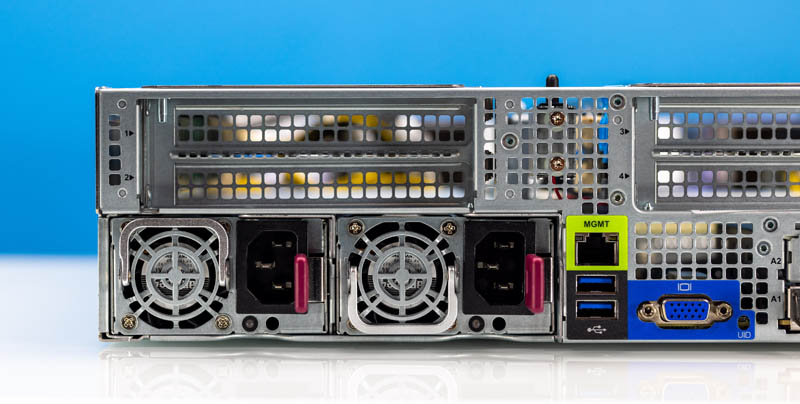
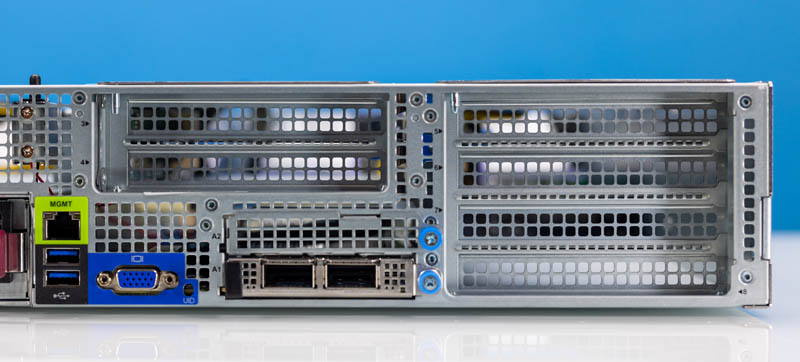
The center block is perhaps the most interesting. Here we have a riser that is identical to the left one. Below that we have a management NIC, two USB ports, and a VGA port for local access. This server does not have onboard networking. Instead, it has up to two AIOM/ OCP NIC 3.0 slots available. Our unit only had one.
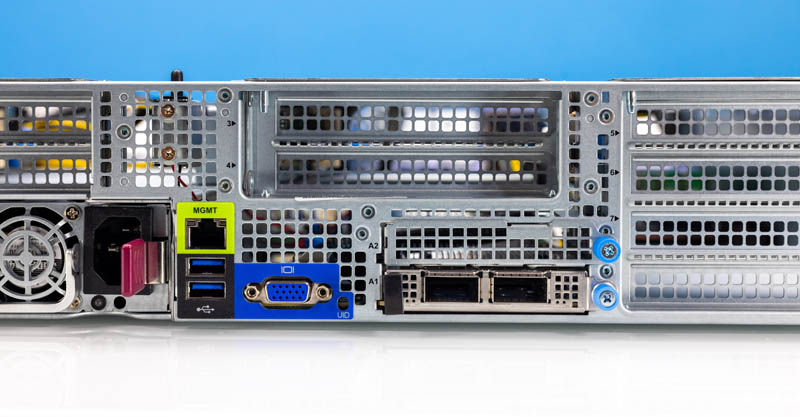
The way this works is fascinating. Supermicro has a mounting structure and then uses cabled connections to service the AIOM/ OCP NIC 3.0 slots.
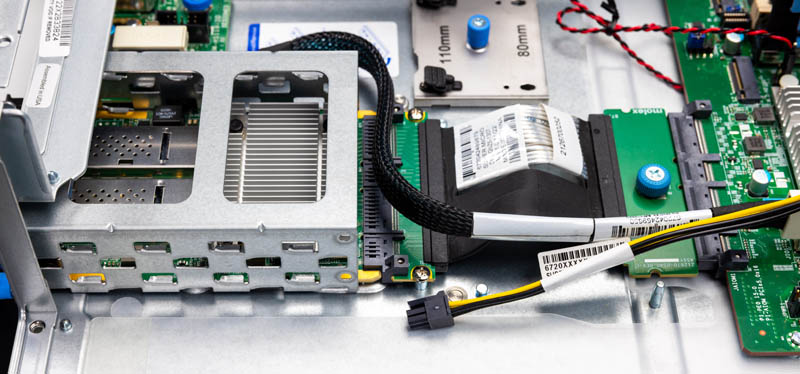
For those wondering why these cables are needed, with PCIe Gen5, signal integrity over distances is a challenge. This certainly adds cost compared to older servers with direct PCB attachments, but it enables something more interesting. For example, this is not a normal 10/25GbE adapter. Instead, it is a dual port 100GbE NIC with 200Gbps of bandwidth. That is still a PCIe Gen4 device, but we expect over the next few quarters to see 400GbE single port or dual 200GbE NICs in these form factors.
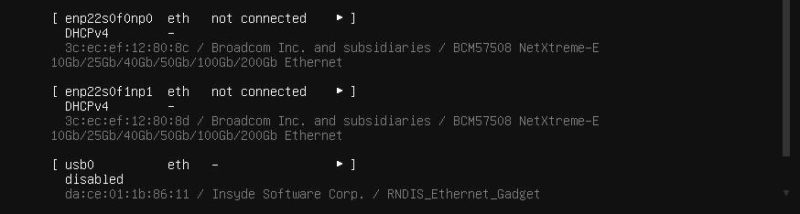
Supermicro has many options, but this is just one that our system was configured with.
The right side is dedicated to full-height PCIe expansion slots.
Comments